“How much do you charge?” is not a question you can answer well without context.
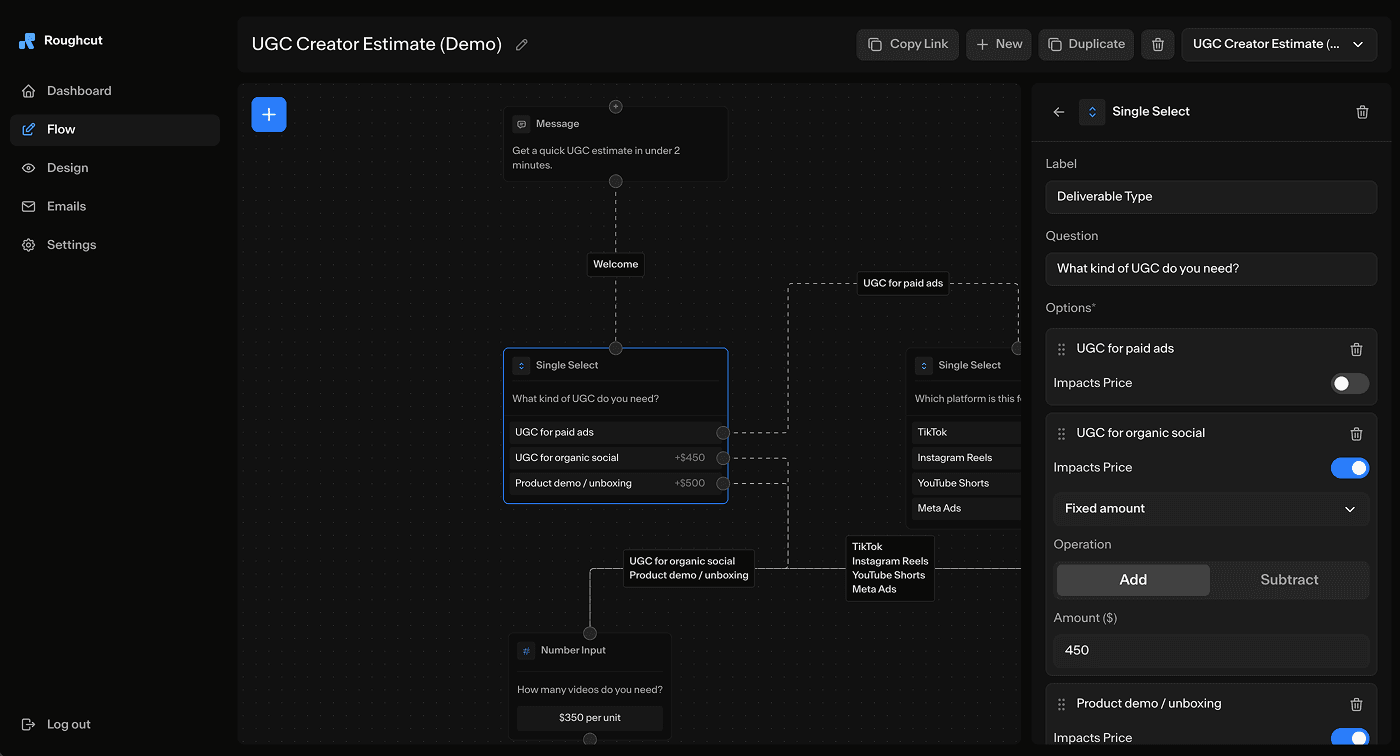
The fastest way to stop guessing is to collect the same inputs every time, in a good order, and tie them to a consistent pricing model.
This post gives you 12 questions that qualify inquiries for both creators and photographers. Use them in email, a form, or as the backbone of a pricing flow.
If you want the bigger why behind pricing consistency, start here: Why Creators Should Stop Guessing at Pricing.
The order matters more than the wording
The goal is to:
- get a clear scope early
- avoid detailed negotiations before you know the project fits
- collect contact info after you’ve delivered value
In plain terms: ask high-signal questions first, branch when needed, and collect the lead at the end.
The 12 questions (and what they unlock)
1) What are we making?
- Creator: video, photos, a bundle, a retainer
- Photographer: portrait session, wedding coverage, product shoot, event coverage
This is your first branch.
2) What is the primary goal?
Examples:
- “Launch content”
- “Paid ads creative”
- “Website refresh”
- “Branding headshots”
This helps you avoid mismatched expectations and it affects usage.
3) What platform or channel is this for?
Creators: TikTok, Reels, YouTube Shorts, Meta Ads. Photographers: web, e-commerce, print, packaging, in-store.
4) How many deliverables do you need?
Be specific:
- number of videos
- number of edited images
- number of SKUs
5) What are the specs?
Creators:
- length range
- aspect ratios
- hook variants
- captions
Photographers:
- style (clean background vs lifestyle)
- location type
- number of people
6) What is the timeline?
Use simple buckets:
- standard
- fast
- rush
This makes rush pricing easy and consistent.
7) Who is providing creative direction?
Creators:
- brand provides brief and talking points
- light concepting
- full concept and script
Photographers:
- client provides shot list
- you provide mood board and styling guidance
8) What add-ons do you need?
Keep this menu short. Common add-ons:
- raw footage
- extra revision round
- alternate aspect ratios
- prop styling
- second shooter
- extra retouching
9) How many revision rounds are included?
The clean way to handle revisions is:
- include 1 round by default
- price additional rounds as an add-on
10) How will the content be used?
This is where a lot of “surprise scope” comes from.
Ask:
- organic use only
- paid ads use
- commercial or brand use
If you want a deeper breakdown, use this checklist: Usage rights, whitelisting, and exclusivity.
11) Do you need whitelisting or branded content tools?
If the project includes Spark Ads access or branded content tools, you want that agreed up front.
Helpful references:
- TikTok Spark Ads docs: Spark Ads creation guide
- Meta policy reference: Meta branded content policies
12) Where should I send the estimate?
Collect contact info after you’ve captured the scope.
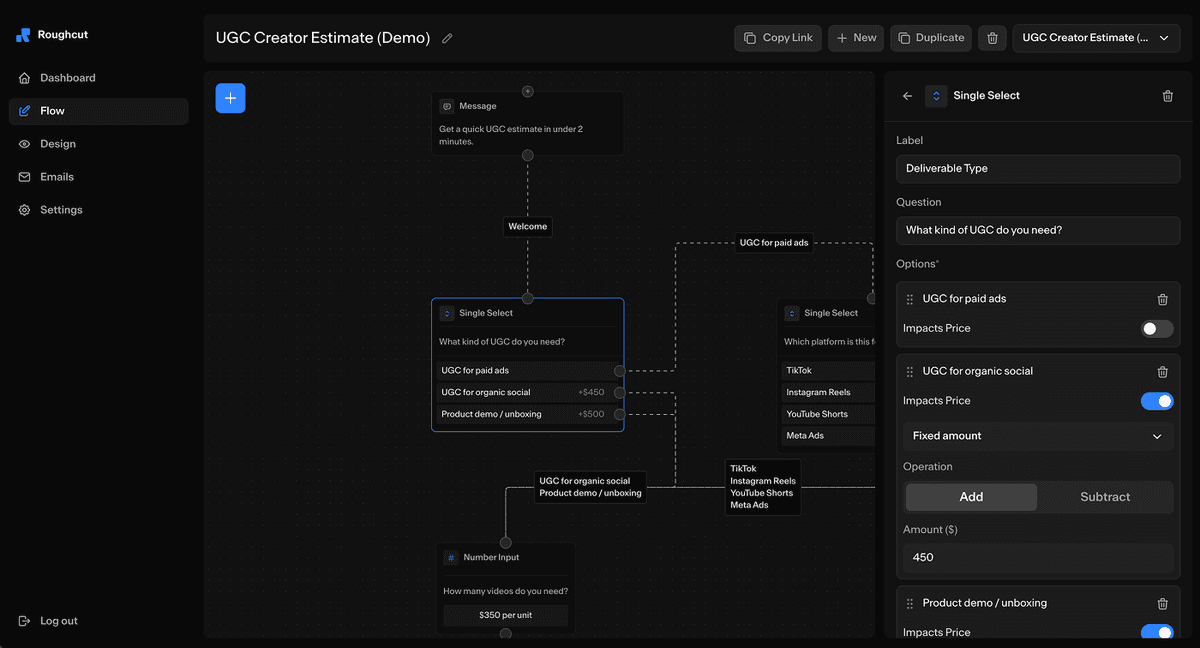
When you do this in a pricing flow, the client gets a range immediately, and you get a lead with all details in one place.
Build your intake flow
Turn these questions into an interactive pricing calculator
Start free trialA simple structure you can reuse
If you want a structure you can copy into an inquiry form:
- Type of project
- Goal
- Platform or channel
- Quantity
- Specs
- Timeline
- Creative direction
- Add-ons
- Revisions
- Usage
- Distribution (whitelisting)
- Contact info
For photographers, this post pairs well with: How to quote photography packages (without endless back-and-forth).
Turn the questions into one link
If you want to stop retyping these questions, the easiest workflow is:
- build the questions once
- send one link in your bio, website, or reply template
- let the flow calculate an estimate range